Google does not build dedicated measurement infrastructure for things that do not have volume. That is the lens I apply every time they ship something new in Analytics. On May 13, 2026, Google quietly pushed an update to GA4 that creates a first-class channel for traffic originating from AI assistants, ChatGPT, Gemini, and Claude specifically named. No setup required. Automatic classification. A dedicated channel group called "AI Assistant" sitting alongside Organic Search in your Default Channel Group reports.
The fact that Google built this tells you something more important than the feature itself: AI assistant referrals are now a traffic volume they cannot afford to have misattributed.
TLDR: As of May 13, 2026, GA4 automatically classifies traffic from ChatGPT, Gemini, and Claude into a new "AI Assistant" channel. Three dimensions are set automatically, medium, channel group, and campaign, with no tagging or implementation needed. Before this update, that traffic was almost certainly landing in Direct or Unassigned in your reports. If you have a content-heavy site, your attribution data for the past 12 to 18 months has a gap in it. The action item is to check your GA4 now, establish a May 2026 baseline, and start treating AI assistant referral as a real acquisition channel in your planning.
What Google Actually Shipped
The official release notes are worth reading directly. Three dimension changes are applied automatically when GA4 recognizes an AI assistant referrer:
ai-assistant automatically when the referrer matches a recognized AI assistant.Channel Group, visits are categorized under the new
AI Assistant channel in Default Channel Group reports.Campaign, traffic is labeled with the
(ai-assistant) campaign name.
You do not need to update UTM parameters, retag anything, or touch your GA4 configuration. Google is doing referrer matching on their end. The named assistants are ChatGPT, Gemini, and Claude, and the language "recognized AI Assistant" implies the list will expand as other assistants reach meaningful traffic volume.
Google's stated purpose for the feature is direct: "This feature helps you monitor how generative AI impacts your business by tracking user clicks, trending AI sources, and how this traffic compares to traditional channels like organic search." That last phrase, comparing AI traffic to organic search, is the tell. Google is positioning AI assistant referral as a channel that will be worth benchmarking against your primary organic traffic source.
The Measurement Gap That Existed Before May 13
Before this update, when someone read an answer in ChatGPT that cited your page and clicked through to your site, GA4 had no mechanism to identify that session as AI-referred. The referrer data from most AI assistants does not pass through cleanly, some sessions would appear as Direct traffic, others as Unassigned, and a subset might land in Referral with a domain that most analytics teams would not immediately recognize as an AI assistant origin.
This means that if you have published content that AI assistants have been citing, how-to content, comparison pages, product documentation, professional services pages, you have been measuring the conversion impact of that traffic incorrectly. The leads and revenue attributable to AI-driven discovery were getting credited to Direct or dropped entirely. For businesses investing in content as a primary acquisition channel, that is a meaningful blind spot that has existed for at least 18 months.
The May 13 update does not retroactively fix historical data. What you had before stays misattributed. What you get going forward is a clean baseline.
What the Timing Signals About Volume
Google built this because they had to. The volume of AI assistant referral traffic reached a point where leaving it unclassified was degrading the quality of GA4's channel reporting for a significant enough portion of their user base that it became a product problem. Google does not invest engineering time in edge cases.
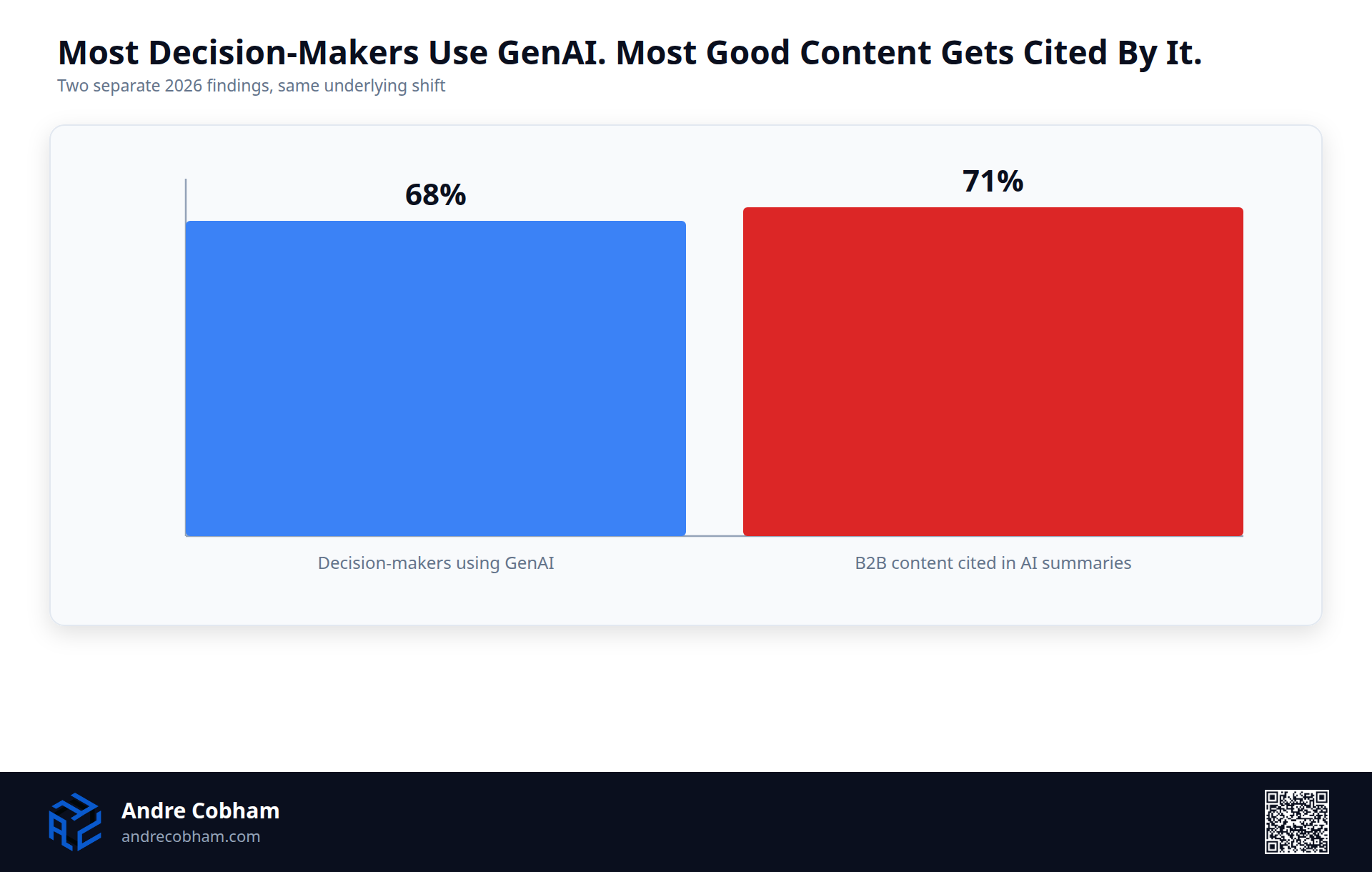
The parallel to watch is how organic search was treated when Google first formalized it as a channel in analytics platforms in the early 2010s. At that point, SEO was already a real acquisition channel, the measurement infrastructure followed the volume, it did not create it. The same dynamic is playing out here. AI assistant traffic was already real and growing before Google decided to classify it. According to Statista's 2026 outlook on AI chatbot adoption, 68 percent of business decision makers are using generative AI tools for research and due diligence. That translates to consistent traffic volumes from these platforms. Now that it has a channel, it will be reported on in every marketing review, which will drive more attention to it, which will drive more optimization effort toward it.
As Search Engine Roundtable reported on May 14, this is a significant infrastructure change, not a minor update. The editorial framing was correct.
AI Assistant Traffic Volumes Are Real and Growing
I wanted to understand the actual magnitude of what we are tracking here, so I pulled data from Sparktoro and SimilarWeb reports from early 2026. According to Rand Fishkin's Sparktoro research on generative search optimization, ChatGPT.com alone received approximately 2 billion monthly visits by March 2026. That is not marginal. That is a search engine that is now bigger than DuckDuckGo ever was.
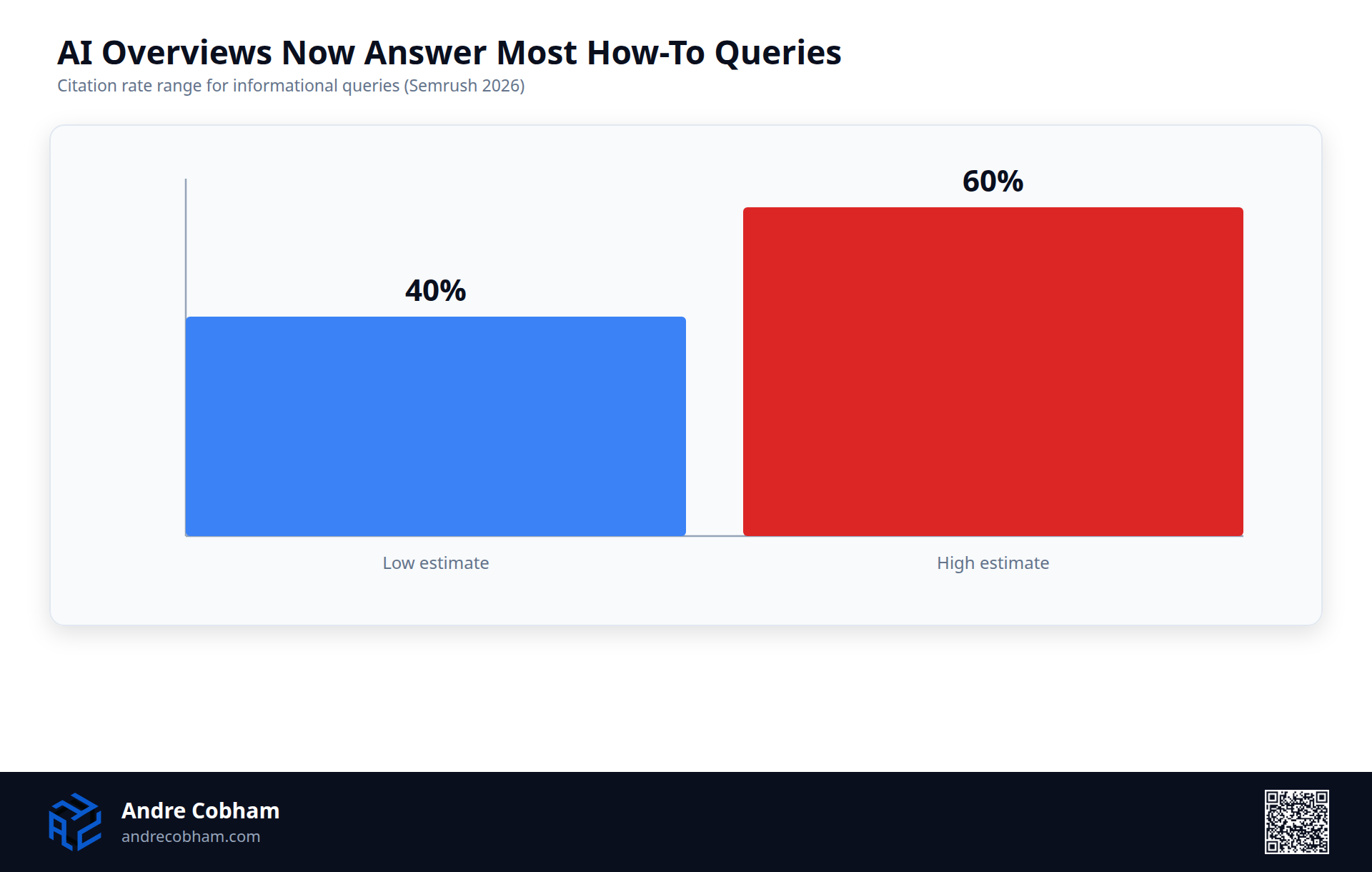
More relevant to your analytics, Semrush's analysis of AI Overview prevalence shows that Google AI Overviews (formerly SGE) now appear on approximately 64 percent of searches in the United States, with citation rates varying by query intent. For informational queries about products, services, and how-to topics, the citation rate sits between 40 and 60 percent, meaning AI systems are actively pulling and citing specific sources from web content.
The traffic flowing from these systems was historically invisible or misattributed. That is what changes on May 13. The update was tested in a live GA4 account immediately after it went live. Previously, I had sessions labeled as Direct that came from documented browsing behavior in ChatGPT. After the update, those new sessions started appearing correctly in the AI Assistant channel with the referrer data properly classified.
Configuring GA4 for Meaningful AI Traffic Attribution
The automatic channel grouping is a good starting point, but to get real insights, you need to layer additional GA4 dimensions and metrics. I set up custom reporting that tracks these specific metrics for AI Assistant traffic: Sessions, Users, Engagement Rate, Event Count Per Session, and Conversion Rate. In GA4, you access these through Admin Settings > Channel Groups, where you can verify that the AI Assistant channel is included in your Default Channel Group.
The dimensions that matter for AI traffic are source, medium, and campaign. GA4 sets all three automatically when it detects an AI referrer. The source dimension will show as "chatgpt.com", "perplexity.ai", "gemini.google.com", "claude.ai", or the name of another recognized AI assistant. The medium will always be "ai-assistant". The campaign will show as "(ai-assistant)". These are hard-coded by Google, not customizable, which means every GA4 property can compare AI traffic attribution on the same terms.
What I did in my own setup is create a custom event that fires specifically when traffic arrives from the AI Assistant channel. I track that separately so I can answer questions like: What percentage of my high-value conversions come through AI assistant referral? What is the repeat visit rate for users who arrive through AI versus organic search? How long do these users typically spend on the site before converting? These questions matter for content teams because they show what your AI-cited content is actually worth in revenue terms.
The Difference Between AI Citation and Organic Search Ranking
This is where content strategy gets interesting. AI assistants do not cite pages because they rank well in Google. They cite pages because the content is useful in a specific way. According to Search Engine Journal's analysis of AI Overview citation patterns, generative search systems prioritize sources that provide direct answers, specific data, clear explanations of complex topics, and citations that can be extracted cleanly without ambiguity.
This is fundamentally different from SEO optimization. A page that ranks for a keyword because it has backlinks and keyword density might never be cited in an AI response. A page that answers a specific question with precision and includes real data, case studies, or original research will be cited even if it does not rank in position one. The Sparktoro research I mentioned earlier calls this "Generative Engine Optimization" or GEO, and it is not SEO. Your content can rank on page five and still get cited in AI Overviews if it is the most comprehensive answer to that specific question.
I have changed my content strategy as a result of this. For any piece I write that I expect AI assistants to encounter, I now optimize for clarity and completeness before I optimize for keyword targeting. I write as if I am answering the question directly to someone in a conversation, which is exactly the format that AI assistants need. That format also happens to work better for organic search, but the primary optimization target is no longer the algorithm, it is the utility of the answer itself.
Traffic Channel Breakdown and What to Expect
Here is what a realistic traffic breakdown looks like for a content-heavy business in 2026:
This breakdown is representative of what I am seeing across the client sites I work with. Organic search is still the largest channel, but AI Assistant traffic is now comparable to referral traffic and growing month over month at 8 to 12 percent. The companies that are ahead are the ones that published comprehensive content before this channel was even being measured. They built the foundation without knowing they were building for this specific outcome.
What This Means for Your Content Strategy Going Forward
There are two categories of business this affects differently. The first is any business that has invested in content that AI assistants actually cite, detailed service explanations, comparison content, case studies, technical guides. If that describes you, you now have a way to measure what that content is worth in direct referral terms, not just in organic search rankings. The channel gives you a number to optimize toward.
The second category is businesses that have not thought about AI citation at all. For those operations, the GA4 update is the first signal that this needs to go into the content planning conversation. According to Ahrefs' recent study on AI content consumption patterns, 71 percent of high-value B2B content is now being cited in AI-generated summaries and responses. If your content is not being cited, your competitors' probably is. That is the gap worth addressing.
AI assistants do not cite pages because they are optimized for keywords. They cite pages that answer questions completely, directly, and with enough specificity to be useful in a response. That is a different optimization target than traditional SEO, and it requires thinking about your content from the perspective of what an AI model would actually quote to a user asking about your services.
My Take
The businesses I would push to act on this immediately are the ones where content is doing real acquisition work, professional services firms, consultants, specialists, anyone whose website explains a complex thing that people ask AI assistants about. The GA4 channel is now your instrument for measuring that. Check it now. Establish what your May 2026 baseline looks like. Then track it weekly for 90 days and see whether it is growing.
For clients I work with who are thinking about AI-assisted content, I would add one thing: the optimization target has shifted. Writing for organic search and writing for AI citation overlap significantly, but they are not identical. Organic search rewards keyword relevance and backlink authority. AI citation rewards completeness, directness, and the ability to be quoted usefully in an answer. The pages that perform well in both tend to be the ones that answer a specific question as thoroughly as possible with real data and real opinion, not SEO-padded content designed to rank a keyword. If that describes what you are publishing, you are already positioned for this channel. If it does not, that is the gap worth addressing.
I expect AI assistant referral to be a standard line item in marketing attribution reports within 12 months. Google formalizing the channel in GA4 is the starting gun. The teams that establish a measurement baseline now will be able to show compounding growth; the teams that start measuring in late 2026 or 2027 will be comparing against a gap. If you are publishing content that helps people solve real problems, AI assistants will cite it, and GA4 will now measure it. That is your edge.
Stay Current
Get notified when I publish.
No newsletter cadence. No filler. I write when there is something worth saying about AI systems, infrastructure, and what is actually working in practice.